In this article
- How a St. Andrew’s cross works
- Is a St. Andrew’s cross suitable for beginners?
- How do you attach someone to the cross?
- What safety points matter most?
- What should you check in a rental or at home?
- How do you choose a cross for home use?
- What happens after release?
- Where can you find stays with a St. Andrew’s cross?
- Frequently asked questions
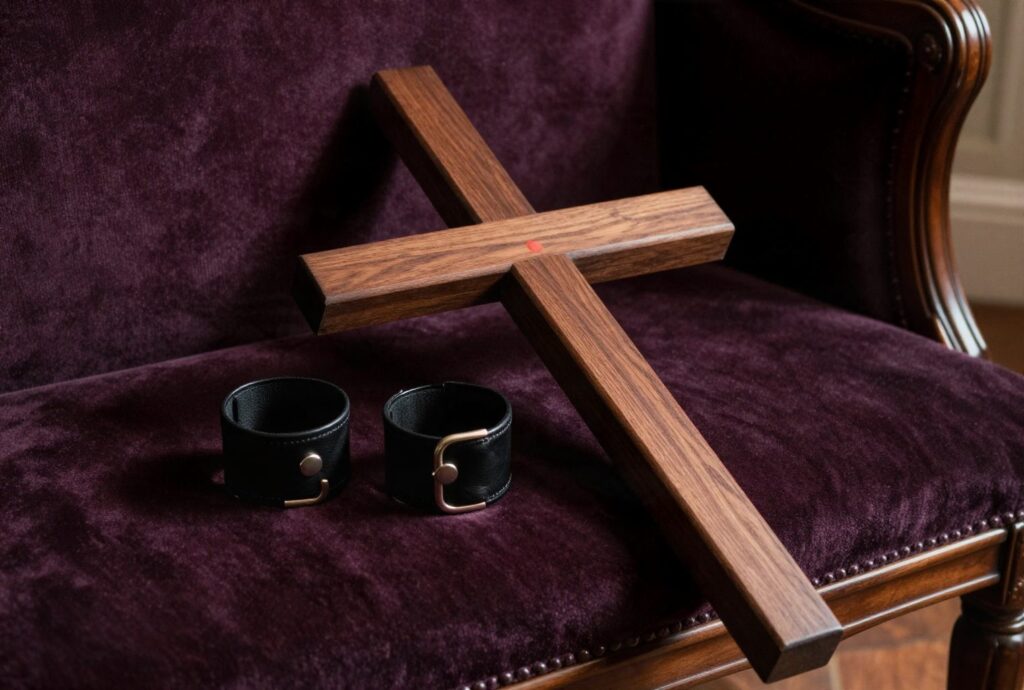
A St. Andrew’s cross is an X-shaped upright restraint frame with attachment points near its four ends, usually for wrist and ankle cuffs. It gives you a stable standing position for consensual restraint without asking a bed, door, or improvised hook to do structural work.
You may also see it called a Saint Andrew’s cross, bondage cross, BDSM cross, X-cross, or X-frame. Models can be freestanding or wall-mounted, padded or bare, compact or large enough to dominate a room. The shape is simple. The safety details are not.
This is a conservative first-use guide. It covers ordinary standing restraint only. Neck restraint, breath restriction, chest compression, suspension, partial suspension, inverted positions, and improvised anchoring belong in hands-on training with an experienced, safety-focused educator—not in a first experiment because the frame looks sturdy.
How a St. Andrew’s cross works
The cross holds the body against an X-shaped frame while cuffs connect the wrists and ankles to separate attachment points. The person being restrained remains standing, with their feet supported by the floor. The top, or person managing the scene, can then control the position, pacing, and agreed activities without relying on a mattress or a piece of household furniture.
Freestanding crosses stand on their own base. Wall-mounted crosses transfer their load to the wall and fasteners, so the installation matters as much as the frame. A heavy cross is not automatically stable, and a wall-mounted model is not automatically safer. The manufacturer’s instructions, the structure behind the wall, the fasteners, and the attachment points all count.
Construction varies widely. Commercial examples use wood, iron, steel, marine-grade aluminum, stainless steel, foam, and vegan leather. Product dimensions found in listings range from about 35 by 78 inches with 36 inches of front-to-back depth to about 73 inches high by 44 inches wide by 38 inches deep. Listed weights range from about 47 pounds to about 110 pounds.
| Feature | What to check | Why it matters |
|---|---|---|
| Frame | Wood or metal, padding, welds, bolts, hinges | Strength and comfort depend on the specific model |
| Attachment points | D-rings, track fittings, and their stated rating | Decorative hardware is not a structural anchor |
| Footprint | Base, floor contact, clearance, and wobble | Movement can turn a calm scene into a fall |
| Restraints | Wide, padded, quick-release cuffs | They should release quickly and avoid awkward pressure |
There is no universal weight capacity for a St. Andrew’s cross. Verify the rating for the exact frame, cuffs, attachment points, and installation. If a rental listing does not identify the equipment clearly, ask the host before you arrive.
Is a St. Andrew’s cross suitable for beginners?
It can be, if “beginner use” means a sober, negotiated, standing restraint scene with both people able to release the cuffs quickly. It is not a beginner shortcut to suspension, rope bondage, impact play, or complicated body positioning. The cross gives you a fixed shape, but it does not make every activity around that shape low risk.
Start with the person’s feet on the floor, a neutral joint position, and enough room to step away. Avoid forcing the shoulders, wrists, hips, or knees toward their maximum range. The body should not be pulled into a hyperextended position simply because the four attachment points make it possible.
Before anything is attached, agree on what will happen, which body parts may be touched or restrained, the position, intensity, approximate duration, safeword, nonverbal signal, and release plan. Consent is specific, informed, freely given, and reversible. A person can change their mind after the first cuff is closed.
Both people should be sober. Alcohol and other impairing substances can reduce judgment and pain awareness, which is a poor combination with restraint furniture. If the plan includes complex restraint, joint instability, nerve or circulation concerns, or any advanced technique, choose an in-person class or supervised practice instead.
How do you attach someone to the cross?
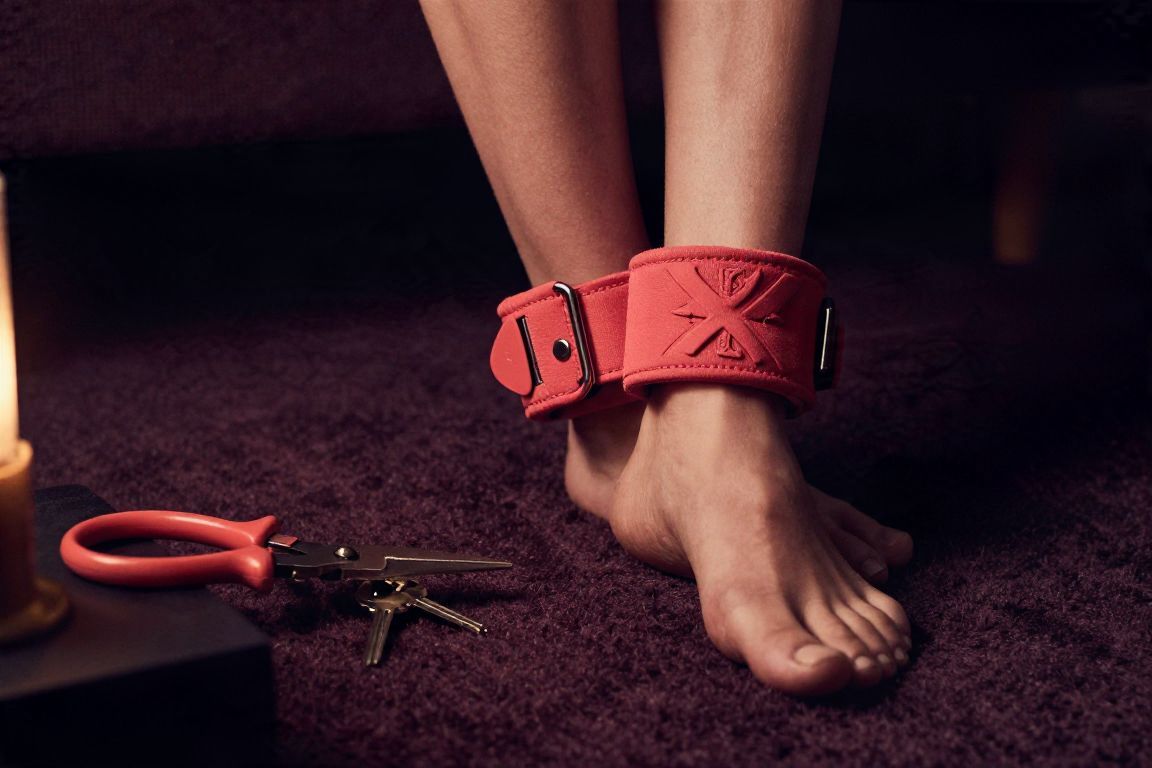
Use purpose-made, padded cuffs with a quick-release mechanism where possible. Do not substitute scarves, narrow straps, cords, belts, or anything that can tighten unexpectedly or become difficult to remove. Practice opening and releasing every cuff before a person is restrained. Keep blunt-tip safety shears and any keys within immediate reach, not in a bag across the room.
- Inspect the unloaded frame. Check welds, bolts, hinges, padding, D-rings, straps, stitching, and every floor contact point. Confirm the manufacturer’s load rating and installation instructions. A freestanding model should sit firmly without rocking. A wall-mounted model should have a verified installation, not decorative hooks, drywall anchors, or an untested door frame.
- Set the scene. Clear trip hazards and provide good lighting. Make sure there is enough space to move around the frame and reach every release. Confirm the safeword and a simple nonverbal signal, such as dropping an object or tapping. Review what “pause” means and what requires immediate release.
- Attach the lower body first. Keep both feet supported and choose a position that does not twist the hips or knees. Place the cuffs so they stay in their intended position without forcing the legs apart or pulling them diagonally. Do not use a neck attachment or any point that requires the body to carry weight off the floor.
- Attach the wrists one at a time. Keep the shoulders relaxed and avoid pulling the arms above a comfortable range. The cuffs should be snug but not tight. Check warmth, color, sensation, movement, grip strength, and comfort before proceeding.
- Test the release. Ask the restrained person to move only within the agreed position and confirm that the frame does not shift. Recheck the cuffs shortly after attachment and continuously during the scene. The person remains attended at all times.
The exact cuff fit depends on the cuff design, body position, and the person wearing it. Do not treat a particular finger count or a fixed gap as a universal safety rule. The useful test is whether the cuff stays secure without creating pressure symptoms and can be removed promptly.
Our advice: Keep the first session deliberately boring. Learn how the frame, cuffs, release tools, and communication work before adding intensity or equipment.
What safety points matter most?
Watch the restrained person rather than assuming silence means comfort. Ask clear check-in questions and pay attention to changes in speech, posture, color, movement, and attention. Release immediately for numbness, tingling, weakness, coldness, color change, sharp pain, dizziness, panic, confusion, breathing difficulty, or withdrawn consent. These are not symptoms to monitor while continuing.
- Never restrain the neck or cover the mouth or nose.
- Do not add chest-compressing positions or breath restriction.
- Do not use suspension, partial suspension, inverted positions, or load-bearing attachment points without specialist training and equipment-specific instruction.
- Do not leave a restrained person alone, even briefly.
- Keep impact tools out of the scene unless their use is separately negotiated and the person using them is trained.
There is no universal safe time limit for remaining restrained on a cross. Body position, cuff design, equipment, health, and the person’s changing condition all differ. For a first session, keep it short and conservative, observe continuously, and release at the first sign of a problem rather than chasing a duration.
If someone’s hands or feet become numb, cold, weak, discolored, or painful, stop and release or loosen the relevant restraint at once. If symptoms persist, or if there is severe pain, breathing difficulty, loss of consciousness, or a concerning injury, seek medical attention and call emergency services when needed. Ordinary home checks cannot promise that an injury has been prevented.
What should you check in a rental or at home?
Start with the frame, not the mood lighting. Put your hands on the structure and look for movement. A cross should not rock, slide, or creak at its joints when unloaded. Inspect the padding for tears, the stitching for separation, and the metal for bent or damaged parts. Check that each D-ring or fitting is properly attached rather than merely decorative.
For a freestanding model, inspect the base and floor contact points. A rug may hide an uneven floor or a sliding foot. Leave enough clearance around the frame to reach the restrained person from more than one direction. A model that fits tightly between furniture may be attractive in a listing photo and awkward in an emergency.
For a wall-mounted model, ask how it was installed and whether the host permits its use. Do not drill into or modify a rental property without permission. Rental-property, hotel, and venue rules may prohibit installation, drilling, commercial sexual activity, excessive noise, or damage. In the United States, there is no single federal rule specifically governing consensual private use of a St. Andrew’s cross; state assault, sexual-assault, injury, age-of-consent, and public-decency laws can apply, so check the law where you live.
Ask to see the manufacturer’s instructions or the equipment information provided by the host. Confirm the load rating, the type of cuffs supplied, the location of the keys, and where the safety shears are kept. If the answer is vague, treat that as equipment information you do not have—not as reassurance.
How do you choose a cross for home use?
Choose based on the room, installation, and intended use rather than weight alone. A portable wooden cross can be easier to store, while a heavier metal frame may feel more substantial but still requires a sound base and verified attachment points. A padded surface may improve comfort, but padding does not replace correct positioning or observation.
Prices checked in October 2026 range from about $390 to $450 for basic or portable freestanding wooden crosses in the United States. Commercial metal-and-wood or metal-frame models run about $910 to $1,300. Larger or multifunctional models run about $1,200 to $2,490, while higher-end custom or heavy-duty models run about $2,010 to $3,020. Shipping, pickup, and lead times vary.
European listings range from about €405 to €1,215 for portable, modern, steel, or stainless-steel crosses, with shipping and taxes potentially separate. Accessories such as quick-release restraints and track fittings can add about $6 to $249. The accessory price is not a useful reason to skip a proper release plan; a key and safety shears need a known place before play begins.
At home, measure the space before ordering. Product examples range from roughly 35 by 78 inches with 36 inches of depth to about 73 inches high by 44 inches wide by 38 inches deep. Those are examples, not a standard size. Confirm the exact dimensions, weight, footprint, materials, and attachment hardware for the model you are considering.
What happens after release?
Release the cuffs before discussing how the scene felt. Then check the skin for marks, the hands and feet for warmth and sensation, and the joints for comfortable movement. Offer water and give the person time to stand or sit normally. Ask about their emotional state without pushing for a cheerful answer; quiet aftercare is still aftercare.
Some marks can occur with restraint, but persistent numbness, weakness, severe pain, breathing symptoms, or loss of normal movement need medical attention. Do not promise that a careful check at home has ruled out an injury. Write down what happened while the details are fresh, especially if equipment shifted or a release tool was needed.
Where can you find stays with a St. Andrew’s cross?
Kinkstay lists private dungeons, kink hotels, BDSM rooms, and love rooms with equipment already installed. Hosts submit each stay and declare its gear; Kinkstay reads the listing but does not visit the room, so confirm the details with the host before paying. The atlas has more than 240 stays tagged with a St. Andrew’s cross, from city apartments to private rooms and converted properties.
Use the atlas filter to compare stays with a St. Andrew’s cross. Ask whether the cross is freestanding or wall-mounted, whether cuffs and safety shears are supplied, and whether the host allows the kind of use you have planned. Confirm the room’s clearance, check-in and checkout times, and any rules about modifying the property. The listing tells you what the host declared; a direct question fills in the practical gaps.
If you are traveling, the same checklist applies. A well-lit room with reachable release tools is worth more than a dramatic photograph. You can also compare the wider equipment and setup with our guide to BDSM furniture, then ask the host only for details that affect your actual scene.
Frequently asked questions
What is a St. Andrew’s cross used for?
It is used for consensual standing restraint, with cuffs attached near the four ends of an X-shaped frame. It can provide a stable position for agreed activities, but it is not automatically suitable for suspension, neck restraint, breath restriction, or chest compression.
Is a St. Andrew’s cross safe for beginners?
It can be appropriate for a beginner when the scene stays sober, attended, negotiated, and limited to supported standing restraint. Use purpose-made quick-release cuffs, keep the feet on the floor, avoid awkward joint positions, and get hands-on instruction for complex or higher-risk practices.
How do you attach someone to a St. Andrew’s cross?
Inspect the frame first, agree on the plan and release signals, then use wide padded cuffs on the wrists and ankles. Attach one limb at a time while keeping the joints in a comfortable position, check circulation and sensation, and keep keys and safety shears within reach.
How long can someone stay restrained on one?
There is no universal safe time limit. Start with a short, conservative session and continuous observation rather than following a fixed number of minutes. Release immediately for numbness, tingling, weakness, coldness, color change, pain, panic, dizziness, breathing difficulty, or withdrawn consent.
Is a freestanding or wall-mounted cross safer?
Neither is automatically safer. A freestanding model needs a stable base and clear floor space, while a wall-mounted model needs a properly verified structure and fasteners. Check the specific manufacturer’s instructions and never treat a heavy frame or decorative hardware as proof of stability.