In this article
- How does BDSM furniture work?
- 1. Spanking bench or bondage horse
- 2. St. Andrew’s cross
- 3. Bondage chair or sex chair
- 4. Bondage table or restraint bed
- 5. Bondage cage
- 6. Sex sling or sling board
- 7. Suspension frame
- 8. Stocks
- 9. Pillory
- 10. Kneeler or kneeling bench
- 11. Queening chair or facesitting stool
- 12. CBT chair or bondage wheel
- What safety checks matter most?
- How can you tell good furniture from bad?
- Where can you find stays with BDSM furniture?
- Frequently asked questions
BDSM furniture is purpose-built equipment that positions, supports, restrains, or confines a consenting adult. It differs from ordinary furniture through features such as attachment points, padding, reinforced hardware, and a stated load rating. The label is broad: “bondage furniture,” “sex furniture,” and “dungeon furniture” overlap in search results, but they are not exact synonyms.
This is a visual glossary, not a catalog of grand promises. Each piece below answers three practical questions: what it holds, what it is for, and who should consider it. A sturdy bench may suit a bedroom; a suspension frame belongs in the advanced-equipment category, even if the product photo makes it look wonderfully straightforward.
Prices are retailer examples read in October 2026, not market averages. Expect shipping, taxes, customs, assembly, and customization to add more. Prices checked in October 2026.
How does BDSM furniture work?
Start with the position rather than the name. A person may be standing, kneeling, seated, lying down, enclosed, or partly suspended. The furniture then provides support and, where agreed, attachment points for restraints. Before use, agree on the activity, intensity, body restrictions, safeword or nonverbal signal, and aftercare while everyone is sober and able to consent.
For a first session, keep the sequence boring in the best possible way: inspect the frame, place it on a clear and stable floor, check every strap and ring, test the position without restraint, then add one attachment at a time. Check in during use. A product name and a polished photograph tell you very little about structural safety.
| Furniture type | Primary position | Typical buyer |
|---|---|---|
| Bench or horse | Face-down, kneeling, or bent over | Beginner to intermediate users |
| Cross | Standing and spread out | Users who want an upright restraint point |
| Chair or table | Seated, reclined, or lying down | Bedroom or dedicated-room users |
| Sling or frame | Supported or suspended | Experienced practitioners with training |
1. Spanking bench or bondage horse
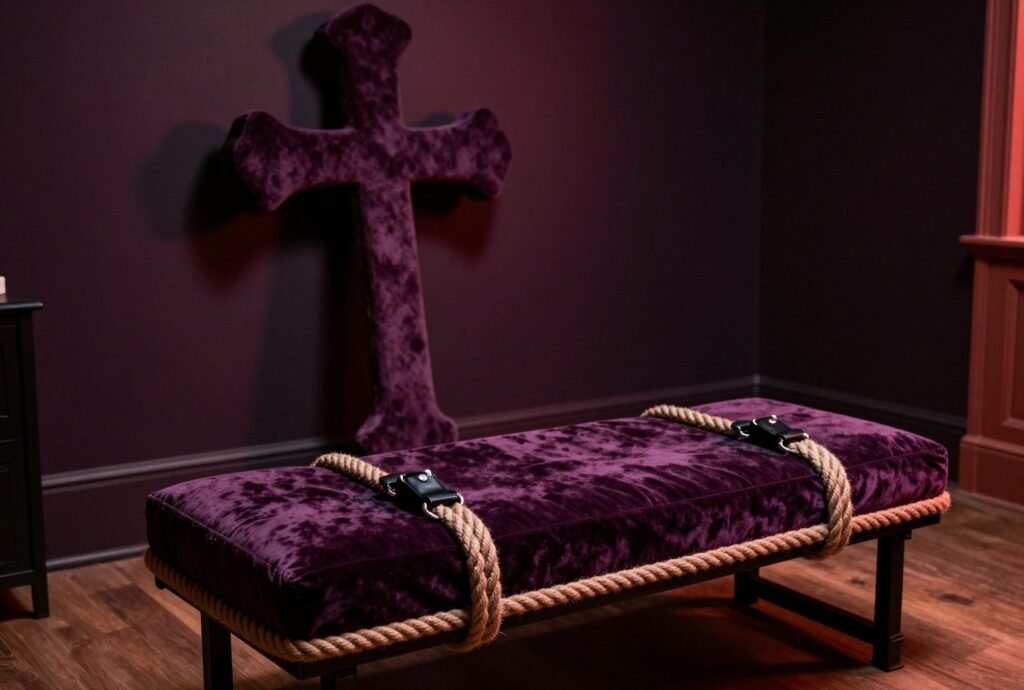
A spanking bench or bondage horse supports someone face-down, kneeling, or bent over, usually with restraint points near the wrists and ankles. It is commonly chosen for impact play and positioning, but the same shape can simply provide a stable, comfortable angle for a scene.
Names vary. A “bondage bench,” “spanking horse,” and “sawhorse” may describe noticeably different designs. Check the actual height, padding, footprint, and attachment layout. This is often the most approachable first piece because it supports a familiar position without requiring suspension. Price examples range from about $250–$1,130 (€220–€1,010).
2. St. Andrew’s cross
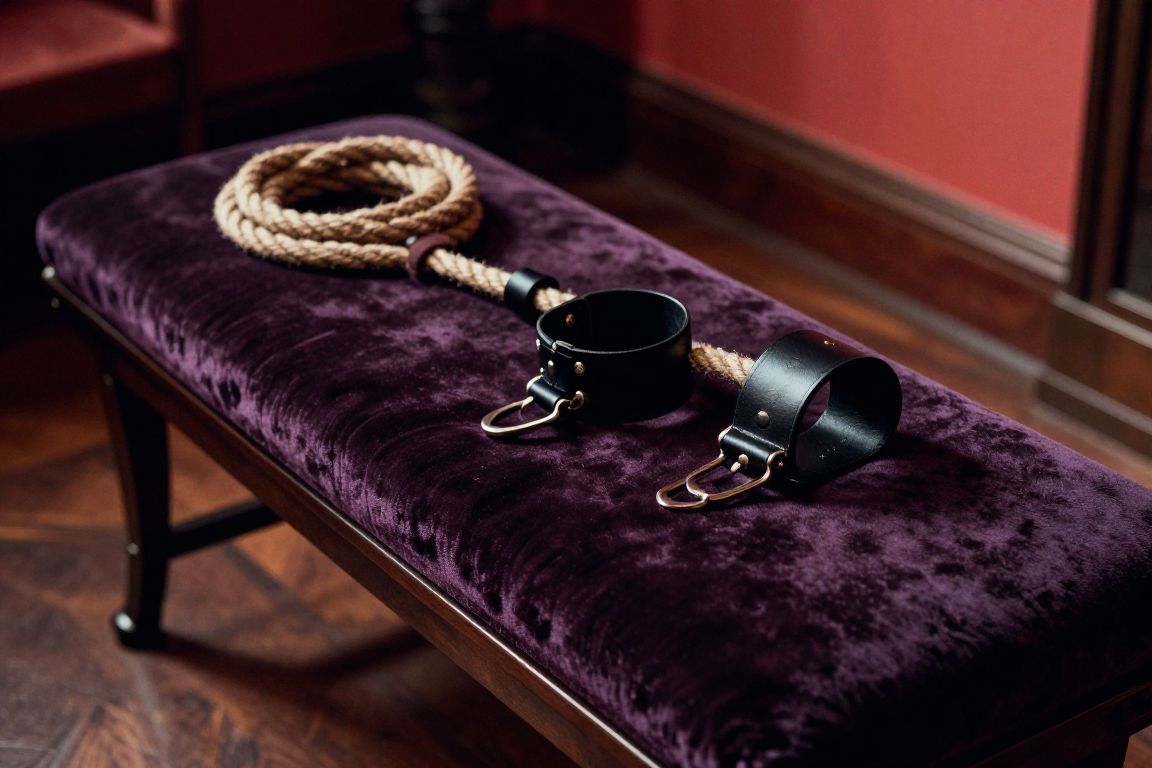
A St. Andrew’s cross is an upright X-shaped frame that holds a standing person spread out, commonly with attachment points near the wrists and ankles. It suits users who want an imposing, visible centerpiece and a standing position rather than a horizontal one.
It may be freestanding, wall-mounted, or portable. That distinction matters more than the word “cross.” A wall-mounted model needs an appropriate structure and permission in a rental. Portable versions still need a stable floor and careful inspection. Similar frames range from about $295–$1,860 (€260–€1,660).
3. Bondage chair or sex chair
A bondage chair supports a seated or reclined posture and may include restraint points for the wrists, ankles, or torso. It is useful when a seated partner should remain supported, rather than balancing on an ordinary chair that was never designed for this work.
Consider this piece if you want several seated positions in a relatively compact footprint. A chair with a cross, curved back, or adjustable angle may feel like a completely different item despite sharing the same listing category. Specialist chairs can cost about $250–$3,050 (€225–€2,720), so inspect the construction rather than shopping by dramatic terminology.
4. Bondage table or restraint bed
A bondage table or restraint bed supports a person lying down for full-body restraint, access, and positioning. It is the closest option here to a dedicated scene surface, with more room than a bench and usually more attachment points than a regular bed.
Look for a surface that can be cleaned, seams that do not trap moisture, and enough clearance to move around it. Some are simple padded platforms; others are substantial pieces of dungeon furniture. US examples reviewed ran about $400–$1,500, while European examples were about €795–€2,360.
5. Bondage cage
A bondage cage is an enclosed structure used for confinement. Listings range from small portable or wheeled cages to larger sleeping-size cages, so “cage” alone does not tell you how much room it takes or what position it supports.
Choose one only if enclosure is part of the agreed scene and communication remains practical. Check the door release, ventilation, edges, and the ability to reach the person quickly. Cages are not automatically safer because they are stationary. Example prices range from about $970–$2,750 (€295–€1,545), a particularly wide spread caused by very different sizes and constructions.
6. Sex sling or sling board
A sling or sling board supports part or most of the body in a suspended or semi-suspended position. It can be compact and comfortable, but its straps, rings, attachment system, and anchor all become load-bearing equipment.
It is worth considering only when you understand the complete system, not just the sling itself. A sling fixed to an unverified ceiling, door, bed frame, radiator, plumbing pipe, or ordinary household fitting is not a sound plan. Prices run about $275–$880 (€199–€785) in the examples reviewed.
7. Suspension frame
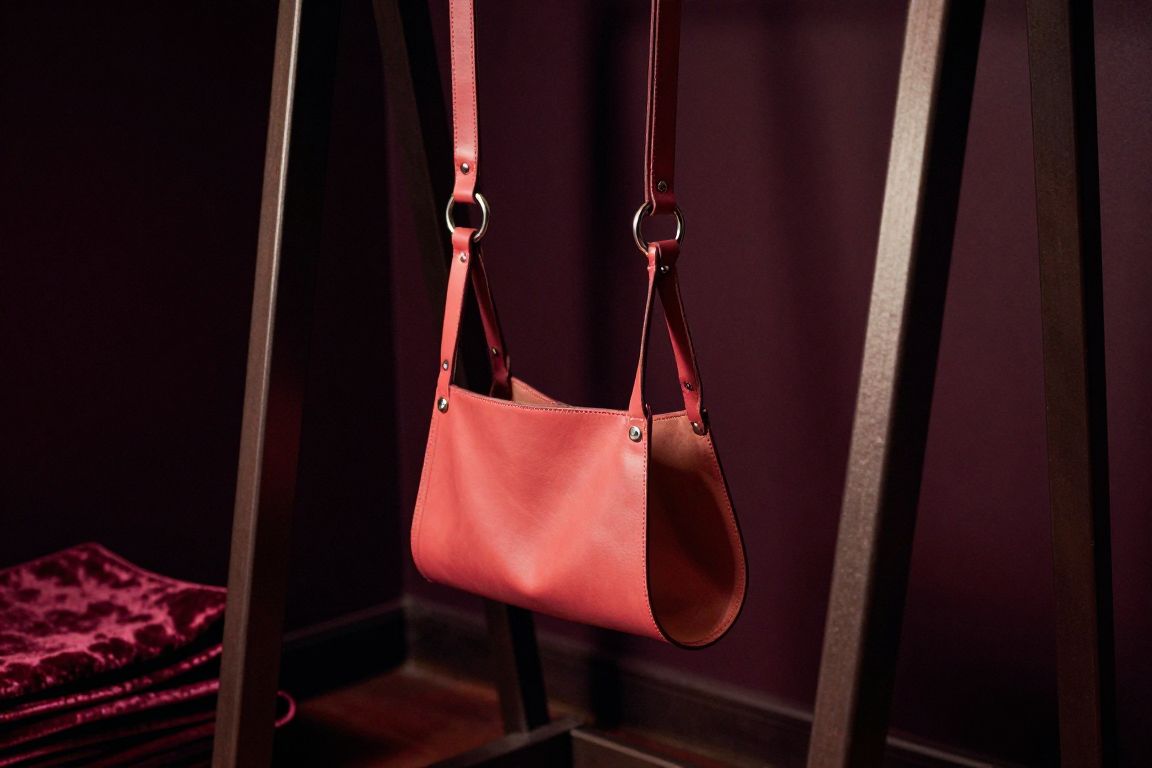
A suspension frame is a freestanding structure designed to support suspension equipment without relying on an ordinary ceiling fixture. It is the clearest example of furniture that should not be confused with beginner-friendly positioning furniture.
The frame reduces one structural uncertainty; it does not remove the need for rigging knowledge, a tested system, an appropriate spotter, and a planned emergency descent. Suspension should be learned through a suitable class or experienced practitioner. Do not improvise with mixed hardware, and do not treat a manufacturer’s stated capacity as a universal guarantee.
8. Stocks
Stocks immobilize selected body areas, commonly the wrists and ankles, in a fixed structure. They are purpose-specific furniture for a contained, seated or kneeling position rather than a general-purpose bench.
Stocks may suit someone who wants a low, compact piece with a very clear function. Check how the openings are shaped, how quickly the restraints release, and whether the person can be observed easily. Basic stocks and small restraint pieces appear around $135–$425 (€120–€380).
9. Pillory
A pillory immobilizes the wrists and neck area in a fixed structure, often with the person standing or kneeling. It is not interchangeable with stocks, and neither is a general-purpose restraint bench.
Because the head and neck are involved, this is specialist equipment that demands careful positioning and close observation. Keep restraints away from the front and sides of the neck, and never use furniture to apply pressure to the airway or neck. The person must have a clear stop signal and a partner close enough to release them immediately.
10. Kneeler or kneeling bench
A kneeler or kneeling bench supports a kneeling posture and is generally smaller and less versatile than a full bondage bench. It can be a practical choice for a bedroom where floor space is limited and the desired position is specific.
Small does not mean flimsy. Look for a broad, stable base, comfortable padding, smooth edges, and attachment points that do not twist the frame. This category sits among the lower-priced options, with simple kneelers and small restraint pieces at about $135–$425 (€120–€380).
11. Queening chair or facesitting stool
A queening chair, also called a facesitting stool, elevates or supports one partner so the other can sit above or across their face. Its job is height and stability, not restraint by default.
The label is less useful than the measurements. Check the seat height, base width, weight distribution, and padding, then use it only on a level surface with room to move. If the design tips or shifts, it has failed at its main task regardless of how elegant it looks. Premium specialist chairs can reach about $3,050 (€2,720).
12. CBT chair or bondage wheel
A CBT chair positions and restrains the lower body for consensual cock-and-ball torture; it is a specialist item, not a general-purpose BDSM chair. A bondage wheel or inversion frame rotates or changes the position of a restrained person. These are different pieces, but both belong at the advanced end of this glossary.
Choose either only for an informed adult scene with specific negotiation, appropriate training, and a rapid-release plan. A bondage wheel introduces movement, falls, circulation concerns, and the need for immediate access to the restrained person. Do not treat a product photo, a stated capacity, or a familiar-sounding name as proof that the equipment suits your experience.
What safety checks matter most?
Before every use, inspect welds, bolts, screws, rings, carabiners, straps, upholstery, and anchor points. Remove damaged equipment from service. Read the exact manufacturer instructions and rating, and do not combine furniture, hardware, or anchors unless the combination is rated for that use.
Keep blunt-tipped safety shears or another suitable cutting tool within immediate reach. Never leave a restrained or suspended person unattended. Check regularly for numbness, tingling, coldness, discoloration, swelling, weakness, or unusual pain; stop and release immediately if any appear. Gags, hoods, and face-down positions can interfere with communication, so establish a nonverbal signal before starting.
Suspension deserves a separate level of respect. Use appropriate rigging education, a tested anchor system, redundancy where appropriate, an emergency descent plan, and a competent spotter. Do not attach suspension equipment to an unverified ceiling or ordinary household fitting. For a rental property, check the written agreement and get permission before anchoring, altering walls, or bringing in equipment that could damage the property.
Our advice: buy for the position you genuinely want, then verify the structure, release method, cleaning surface, and room around it. A dramatic name is not a safety specification.
How can you tell good furniture from bad?
Start with information. A useful listing identifies materials, dimensions, attachment points, padding, care instructions, and a manufacturer’s stated load rating. Common frame materials include powder-coated steel, solid hardwood, and steel-wood hybrids. Vinyl and faux leather are generally easier to wipe clean than fabric; genuine leather needs more care.
Then look at the boring details. A good piece sits firmly, has no sharp edges, uses hardware that can be inspected, and allows a partner to reach the person from more than one side. A bad one hides its fixings, gives no dimensions, uses vague claims such as “holds anything,” or treats a photograph as the entire specification.
One European bench example measures about 75 cm high, 80 cm wide, and 90 cm long and weighs about 34 kg. That is one product specification, not a standard bench size. Made-to-order furniture may take up to eight weeks before shipping, and custom-built or commercial-grade pieces commonly cost about $800–$2,500 (€715–€2,230) or more. Custom fabrication can exceed $5,000.
Where can you find stays with BDSM furniture?
If you would rather try a furnished room before buying, Kinkstay lists private dungeons, kink-friendly stays, BDSM rooms, and love rooms with equipment already installed. Every stay is submitted by its host, who declares the gear; Kinkstay reads listings but does not visit the rooms, so confirm dimensions, anchoring, cleaning, and house rules with the host before paying.
Use stays with furniture filters to compare rooms by equipment, country, and price. The atlas has more than 240 stays with a St. Andrew’s cross, more than 240 with a tantra chair, more than 110 with a sling or sex swing, more than 50 with a cage, and more than 40 with a bondage bed. Those counts describe listed equipment, not a guarantee that every item suits every body or activity.
Ask whether the furniture is freestanding or anchored, what the room’s rules say about restraints and marks, how surfaces are cleaned, and whether the host can provide exact dimensions. A private apartment with a cross and a converted barn with a playroom may both appear under a broad category while offering very different practical setups.
Frequently asked questions
What is BDSM furniture?
BDSM furniture is purpose-built equipment that positions, supports, restrains, or confines a consenting adult. It may include padding, attachment points, reinforced hardware, and a stated load rating. The term covers many designs, so read the actual specifications rather than relying on the category name.
What is the best first piece of BDSM furniture?
For many beginners, a stable spanking bench, kneeler, or simple bondage chair is easier to understand than suspension equipment. The best choice depends on the position you want, your available space, and whether you can inspect and release the person easily. No item is universally safe.
What is the difference between a spanking bench, bondage bench, and bondage horse?
The names overlap in listings. A spanking bench or bondage horse generally supports a face-down, kneeling, or bent-over position, but the height, shape, padding, and restraint points can differ substantially. Compare dimensions and construction instead of assuming the names describe identical furniture.
How much does BDSM furniture cost?
Simple kneelers, stocks, and small restraint pieces cost about $135–$425 (€120–€380) in the examples reviewed. Benches, crosses, chairs, tables, cages, and slings cover much wider ranges, while custom pieces commonly reach $800–$2,500 or more. Delivery, taxes, assembly, and customization may be extra.
Can BDSM furniture be used in a bedroom, rental, or hotel room?
Freestanding, compact pieces can fit some bedrooms, but measure the footprint and leave clear space around them. In a rental or short-term stay, check the written rules and get permission before anchoring, altering walls, or using equipment that could cause damage. Never assume a hotel or host permits it because the furniture is portable.