In this article
- At a glance
- How do you choose a respectful destination?
- How do you choose the right room?
- What should you do before crossing a border?
- What belongs in a discreet travel bag?
- What should happen during arrival and check-in?
- How do you behave in shared spaces?
- Which mistakes make a guest memorable for the wrong reasons?
- Frequently asked questions
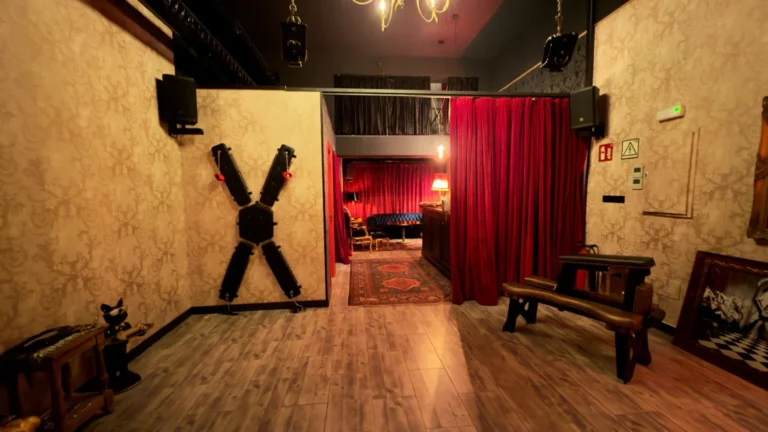
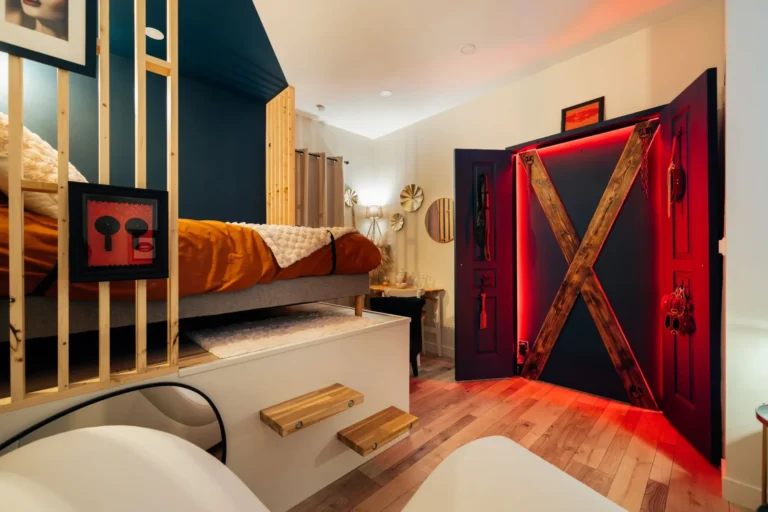
Kinky tourist etiquette begins before you arrive: you are a guest in someone else’s property, not a performer in a private fantasy set. The room may contain a St. Andrew’s cross, a tantra chair, a cage, or a neatly folded set of restraints, but none of those objects are an invitation to use them.
The rules change slightly depending on the setting. A private playroom gives you more privacy than a hotel lobby, but it does not erase house rules, rental terms, local law, or the need to ask. In a shared property, the person in the elevator may have no interest in your plans at all. Treat them accordingly.
This guide is for an adult traveler booking a kink-friendly hotel room, private dungeon, playroom, or short-term rental. Think of it as a practical code of conduct: how to choose, ask, arrive, play, pack, and leave without becoming the story the host tells over coffee.
At a glance
- Who it suits: Adults who want a private, gear-equipped stay and are comfortable following property rules.
- Best timing: Any season works; allow extra planning during holiday travel, festivals, conventions, and busy weekends.
- How long to go: A short overnight can work for a first stay; a longer visit gives you more time to settle in and recover.
- Budget: Check the full room price, cleaning charge, deposit, transport, and any required fees before you commit.
- Book first: Confirm the room’s equipment, permitted activities, visitor policy, privacy arrangements, and check-in process with the host.
How do you choose a respectful destination?
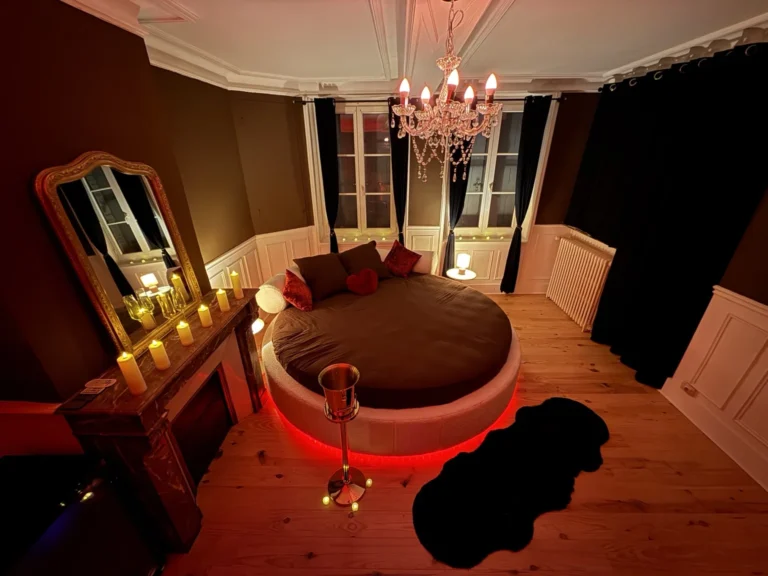
Start with the kind of privacy you need. A converted barn with a playroom in Burgundy may offer seclusion and outdoor quiet. A city apartment with a St. Andrew’s cross may offer easier transport and more ordinary neighbors. Neither is automatically more permissive. The address changes the logistics, not the basic obligation to behave well.
Use the stay directory and filters to compare regions, prices, and declared equipment. Kinkstay is an atlas, not the booking agent. Each host submits the listing and declares what is present, while Kinkstay reads the information without visiting the room. Ask the host to confirm anything important before you pay.
Think about the whole property, not only the play space. Is there a shared entrance? Will you pass through a lobby, elevator, restaurant, or ordinary hallway? Is the playroom in a separate building? A private room does not make public areas private, and a discreet arrival may matter more to you than an impressive equipment list.
Before booking, send a calm, specific message. You do not need to explain your entire personal history. Try: “Hello, I’m considering these dates for two adults. Could you confirm which equipment guests may use, whether outside visitors are allowed, the quiet hours, the cleaning process, and how private check-in is handled?”
Then ask the less glamorous questions. Confirm the guest count, linens, toy use, permitted activities, noise expectations, damage policy, and whether the host must approve anything unusual in advance. A “kink-friendly” label is not blanket permission for sex, nudity, group play, impact play, alcohol, recording, or every item in the room.
House rules override general community etiquette. A host may prohibit conduct that would otherwise be consensual between adults. Read the rules before entering and again when you arrive, because memory is a poor substitute for a written policy after a long flight.

How do you choose the right room?
Choose equipment you understand, not equipment that photographs well. A cross bolted securely to a wall, a sling, a massage table, or a bondage bed can make a room useful. It can also create questions about safe use, weight, cleaning, and permitted positions. If you have never used a particular item, ask the host for instructions or a qualified monitor’s guidance rather than improvising.
Read the listing language closely. “Available” may mean installed in the room, stored nearby, or available only by request. “Toys provided” does not tell you what is included, how items are cleaned, or whether personal items may be used on shared surfaces. Ask for the practical details without embarrassment: “Which equipment is for guest use, and what cleaning or covering procedure do you require?”
Consider sound and visibility. A private rural room may still have neighbors. An apartment may have thin walls. A balcony, parking area, hallway, or open window is not a private play space simply because you have rented the room. Keep intimate behavior inside the permitted area and follow quiet hours.
Privacy deserves its own check. Ask whether the host lives on-site, whether anyone enters during the stay, and how keys or codes are handled. Do not request another guest’s identity or ask the host to reveal who stayed before you. Never publish the property address, room number, host identity, or identifiable details of other visitors without explicit permission.
If the stay includes shared facilities, treat them like a small community space. Wait your turn. Keep personal items together. Do not inspect another guest’s toy bag, collar, luggage, or clothing. Presence in a playroom is not consent to conversation, touching, flirting, or observation.
What should you do before crossing a border?
Travel rules are part of etiquette because a poorly packed bag can create trouble for you, the host, and everyone waiting behind you at security. Check the destination country’s customs guidance, your airline’s dangerous-goods rules, and the rules for any country where you change planes. The U.S. Department of State says travelers remain subject to the laws of the destination country, including during a connection.
Do not assume that a toy, restraint, lubricant, medication, blade, impact item, or electronic device is permitted simply because it is legal at home. U.S. Customs and Border Protection says restricted items may be seized, and import rules differ by country. A private room also does not make public conduct, image-taking, noise, fire, or sexual-conduct rules disappear.
For air travel, follow the Federal Aviation Administration and operating airline instructions. Spare lithium batteries and power banks belong in carry-on baggage, with their terminals protected. Rechargeable batteries from 0 to 100 watt-hours are generally allowed; 101 to 160 watt-hours require airline approval, and batteries above 160 watt-hours are forbidden on passenger aircraft. Do not fly with a damaged, swollen, overheated, or recalled battery.
Liquids and gels carried through U.S. security generally fall under the Transportation Security Administration’s 3-1-1 rule: containers of 3.4 ounces or less in one quart-size clear bag, one bag per passenger. International procedures may differ, so check again before you leave. Keep essential medication and prescribed supplies accessible, and confirm that any medication is legal at your destination.
What belongs in a discreet travel bag?
Pack for the trip you are actually taking, not an imaginary inventory of every possible mood. Bring comfortable clothing, personal hygiene items, chargers, prescribed medication, and any aftercare supplies you rely on. If barriers are appropriate to your activities, pack them in compliant quantities and replace them between acts. Oil-based lubricants can weaken latex condoms, so check the ingredients rather than trusting a familiar bottle.
- Protect battery devices: Switch them off, prevent accidental activation, and keep spare batteries or power banks in your carry-on.
- Separate liquids: Use travel-sized containers where required and place them where security staff can inspect them without unpacking your entire bag.
- Bring personal essentials: Keep medication, identification, money, a charged phone, and a way home under your control.
- Pack discreetly but honestly: A plain pouch protects privacy; it does not exempt an item from airline or customs rules.
Do not surrender your passport, medication, or essential identification to a play partner or host. Tell a trusted person your general itinerary, not the private details of your scene. You should have enough money for transport away from the property if plans change.
A host may provide some supplies and prohibit others. Ask rather than assume. “Are personal restraints allowed?” is a perfectly ordinary question. So is “Do you supply clean covers for the bench, and where should used linens go?” Good etiquette is often just useful specificity wearing a nicer shirt.
What should happen during arrival and check-in?
Arrive at the agreed time and use the agreed entrance. If the host has asked you to text rather than knock, text. If check-in is contactless, do not wander around looking for a more interesting door. Keep your luggage contained and your conversation ordinary in shared areas.
At the start, confirm the essentials in five minutes: where the exits are, which spaces are private, what equipment is approved, where cleaning supplies are kept, how to report damage, and who to contact if something feels wrong. Ask before moving furniture or opening cabinets. Take a moment to inspect unfamiliar equipment without treating the room like a museum exhibit.
If a host or dungeon monitor says to stop, slow down, leave an area, or follow a procedure, do it immediately. In a play space, “DM” usually means dungeon monitor, not necessarily the tabletop gaming role. A monitor or host may respond to a safety concern or intervene when a safeword is ignored.
Agree on communication before a scene begins. Set limits, a safeword, and a reliable visual signal if speech could be restricted. Do not play with anyone too impaired to give or withdraw meaningful consent. When a safeword is used, stop first and discuss what happens next only after everyone is safe.
For unfamiliar equipment, restraints, suspension points, electrical devices, fire, or activities with serious risk, get instruction from the host or an experienced practitioner before using anything. Keep safety shears available when restraints make them relevant, and check circulation regularly. If you are learning a higher-risk skill, take a class rather than turning a holiday rental into your laboratory.

How do you behave in shared spaces?
Use ordinary public manners in lobbies, elevators, restaurants, parking areas, hallways, and any other shared or visible space. Dress and behave according to the property’s rules. Do not assume a collar, harness, or other visible item is welcome outside the private room. Ask the host if you are unsure.
Do not touch another person, their clothing, toys, luggage, collar, or equipment without clear permission. Eye contact, a smile, a revealing outfit, or someone’s presence near a play area is not consent. A “no” needs no debate, explanation, second attempt, or disappointed performance.
If you see a scene in a shared play space, keep a respectful distance and do not cross between participants. Watching is not an invitation to participate. Do not interrupt, enter, offer advice, or reach for equipment unless explicitly invited. If something appears genuinely dangerous, alert the designated host or monitor instead of physically intervening, unless immediate action is necessary to prevent serious harm.
Photography and recording are the strictest part of the social contract. Assume no photos, video, or audio unless the host expressly authorizes it. A visible phone can make people feel observed even when you are only checking a message. Permission from one person does not cover everyone in the room, and never post an identifiable image without separate permission.
Keep conversations discreet. Do not identify, track down, gossip about, or publicly “out” people you meet. Do not share the room number, property address, guest list, or a distinctive story that makes someone recognizable. Privacy is not merely politeness here; it is a basic condition of many people’s participation.
Which mistakes make a guest memorable for the wrong reasons?
The first mistake is treating the listing as a promise that every fantasy is allowed. The second is assuming private means unsupervised, unrestricted, or legal. The third is arriving with a suitcase full of unfamiliar gear and no plan for batteries, cleaning, or customs. All three are preventable with one clear message to the host.
Another common error is treating a host like a concierge for personal boundaries. Hosts can explain their property and policies. They cannot grant consent on behalf of another guest, make a private person available for conversation, or guarantee that every risk has vanished. Ask about the property, then ask the actual person before touching or involving them.
Do not use alcohol or drugs as part of a scene when they make consent unclear. Do not pressure someone who declines. Do not bring unapproved outside guests. Do not take a room key, access code, or host contact information beyond what is needed for your stay. A good guest is not memorable because they were invisible; they are memorable because they were easy to trust.
At checkout, return equipment to its original position, clean shared surfaces as instructed, dispose of supplies properly, and report damage honestly. Do not hide a broken strap under a towel and hope the furniture develops amnesia. Gather every personal item, remove private notes or photos, and leave on time if the booking has a stated checkout.
Send a brief thank-you if the stay went well, and keep any public review general unless the host and other guests have agreed to identifying details. A useful review can mention the accuracy of the equipment description, privacy of the check-in, and clarity of the rules without publishing the address or exposing anyone’s personal life.
For a deeper pre-booking checklist, read questions to ask before paying. You can also compare the atlas’s real, host-submitted listings through the kink-friendly stay atlas before contacting the host directly.
Our advice: ask the least glamorous question before you arrive. “Where do used linens go?” can prevent more trouble than a very confident plan.
Frequently asked questions
What are the basic rules for a first visit?
Read the house rules, ask what is permitted, arrive sober enough to give and receive consent, and treat shared areas like ordinary public spaces. Ask before touching people, property, or equipment, clean up afterward, and follow the host’s instructions immediately.
Can I watch a scene without making people uncomfortable?
Only watch if the setting and participants clearly allow it. Keep a respectful distance, do not stare, comment, cross between people, interrupt, or treat watching as an invitation to join. If you are unsure, ask the host or monitor rather than the people in the middle of a scene.
May I touch toys, restraints, collars, luggage, or furniture?
Ask first every time, including when an item is in a private room. A host can explain which equipment is approved for guest use, but another person must give permission for their belongings or body. The presence of an object in a play space is not permission.
Can I take photos or videos in a playroom?
Assume no recording unless the host expressly authorizes it. If photography is allowed in a designated area, obtain permission from every identifiable person and do not post images without separate permission. A no-photo rule is binding even when taking a picture might not independently break a criminal law.
How can I ask a host about rules without sounding intrusive?
Use practical, neutral questions: “Which equipment may guests use?” “Are outside visitors allowed?” “What are the quiet hours?” “How are linens and cleaning handled?” Specific questions show respect for the property and give the host a chance to explain limits before you arrive.