In this article
- 1. Start with the mysterious masked pair
- 2. Try the elegant villain and loyal accomplice
- 3. Dress as a detective and the elusive suspect
- 4. Become the captain and the glamorous stowaway
- 5. Choose the healer and the dangerous patient
- 6. Build a matching leather-and-lace look
- 7. Make aftercare part of the costume
- How do you bring up a costume with your partner?
- How do you set limits before the night?
- Where can couples wear these costumes?
- Frequently asked questions
Kinky halloween costumes begin with a shared look across the room: one of you adjusts a black glove, the other checks the last strap in the mirror, and both of you know the evening has a little more charge than an ordinary night out. The best costume is not the most elaborate one. It is the one that gives you a character, a few agreed signals, and enough comfort to stay playful.
You can put these ideas together at home tonight or pack them for a private stay on your next trip. Keep the costume easy to remove, easy to move in, and easy to explain if your plans include a public party. The private meaning belongs to both of you, even if everyone else thinks you are simply very committed to the theme.
1. Start with the mysterious masked pair
A mask does a remarkable amount of work for very little luggage. One of you can wear a simple black eye mask, while the other chooses a half-mask, gloves, or a dramatic collar worn as part of the outfit. Keep the rest sharp and understated: dark clothing, polished boots, and one deliberate detail that makes the costume feel chosen rather than assembled in a panic beside the laundry basket.
Before you leave, decide what the masks mean. Perhaps the masked partner gets to choose the next stop, or perhaps the mask is only a visual cue for a private game later. Agree that either person can remove it at any time. If you are going to a crowded event, make sure you can see clearly, hear one another, and identify exits without assistance.
A mask should never reduce your ability to communicate. A small gesture can be useful, but it should not replace words when you need to pause or change plans.
Our advice: Give the costume one private signal, not a whole secret language. You want something playful enough to remember after the second drink, not a puzzle with terrible customer support.
For a private evening, place the masks beside the bed or on a chair rather than wearing them from the start. The anticipation is often more effective than making the accessory do everything at once.

2. Try the elegant villain and loyal accomplice
This pairing works for couples who want a strong contrast without buying two complete costumes. One person dresses as the polished villain: tailored black clothing, a long coat, a cane used only as a prop, or a dramatic piece of jewelry. The other becomes the trusted accomplice with a fitted vest, rolled sleeves, or a narrow tie. The look can stay sophisticated enough for dinner and still feel distinctly theatrical once you return to private space.
Talk about the roles before dressing. “Would you enjoy being the one in charge of the plan tonight?” is clearer and kinder than assigning a character by surprise. The role can last for one scene, one drink, or the walk from the front door to the room. It does not carry into real decisions, and it certainly does not override a no.
Pack a change of shoes if the outfit includes anything restrictive. A villain who cannot walk three blocks is less menacing than mildly inconvenienced. If the cane is more than decoration, leave it as decoration; props are there to establish mood, not to become equipment by accident.
3. Dress as a detective and the elusive suspect
A detective costume gives you a natural reason to search, question, and leave clues. A trench coat, notebook, tie, or small flashlight can create the look. The suspect can wear a bold color, distinctive gloves, or a single piece of costume jewelry that the detective is supposed to notice. This is especially easy to prepare for a trip because most of the clothing can come from an ordinary suitcase.
Set the boundaries while you are still laughing at the premise. Decide which questions are part of the game and which topics remain private. Choose a safeword that is easy to remember, and agree that “pause” means the scene stops while you check in. If the costume includes a blindfold for a private moment, keep safety shears nearby and never use it when either person needs to move around an unfamiliar room.
Make the clues simple. A note in a coat pocket, a lipstick mark on a paper napkin, or a key placed in plain sight is enough. The point is the shared story, not an escape-room budget.
4. Become the captain and the glamorous stowaway
This costume is a good fit for a private stay with a nautical or old-fashioned mood. One of you can wear a structured jacket, cap, or striped shirt. The other can choose a scarf, boots, and a dramatic travel bag. You do not need a full uniform. A few clear shapes and one repeated color will make the pairing read immediately.
Use the costume to plan a sequence for the evening. The captain chooses the music and the first drink; the stowaway has a secret destination; both of you decide when the story ends. Keep the physical part gentle and optional. A scarf is an accessory, not a restraint, and any tie or garment that could tighten should remain loose and easy to remove.
If your destination has a playroom, check the host’s listing before packing extra props. Kinkstay lists private dungeons, kink hotels, BDSM rooms, and love rooms with equipment already installed, but every stay is submitted by its host. Read the listing as a plan, not as a guarantee that you have personally inspected the room.
You can browse the atlas of kink-friendly stays by location and available gear. Book with the host or with the partner platform named on the stay’s page, and confirm practical details before you travel.

5. Choose the healer and the dangerous patient
This is a costume for two adults who enjoy a little melodrama, not a reason to imitate medical treatment. One person can wear a white coat or simple professional-looking outfit, while the other carries a clipboard, paper wristband, or oversized glasses. Keep the styling clearly theatrical. Avoid real medical claims, fake emergencies, or anything that could confuse staff or other guests.
Agree on the limits before the role begins. The “patient” can decide what questions are off-limits, and the “healer” can ask for consent before every new part of the scene. If you use a clipboard, write only silly fictional notes. Do not record private information, take photographs without permission, or involve strangers in the story without their clear agreement.
This theme works well when you want a costume that can move from a public setting to a private one. In public, it is simply a pair of character outfits. Later, the clipboard can become a menu of mutually agreed choices: music, a massage, a change of clothes, or an early night. A costume does not need to produce a performance. Sometimes it only gives you a reason to ask, “What would you like next?”
6. Build a matching leather-and-lace look
For a more abstract pairing, choose a shared material or color instead of a named character. Leather-look details, lace, satin, metal accents, or deep red can make two different outfits feel connected. One person might wear a fitted vest and gloves; the other might choose a lace top, boots, and a structured jacket. Keep the pieces comfortable enough for sitting, walking, and removing layers without a wrestling match.
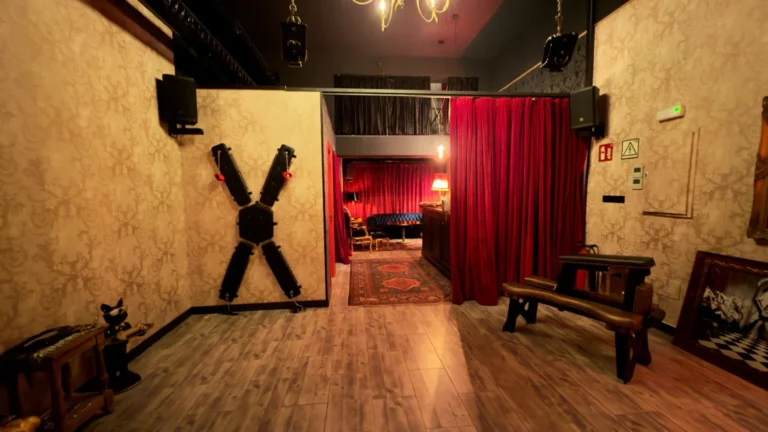
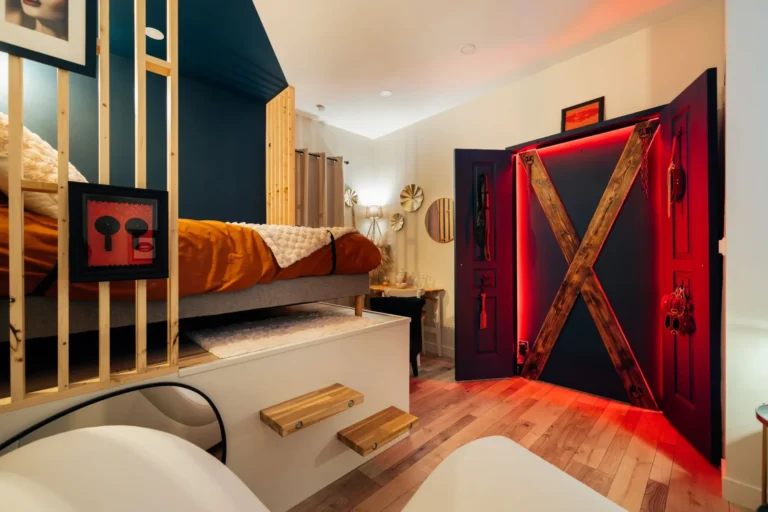
This look is particularly practical for a weekend away. Pack one statement item each, then wear ordinary basics underneath. A private room with a ceiling mirror, a dance pole, or a St. Andrew’s cross may give the outfit a visual setting, but the equipment belongs to the room and should be used only after you have checked how it works and what the host permits. If you are unfamiliar with a piece of equipment, learn from an experienced practitioner or a class before trying anything demanding.
Do not assume that a listing’s photograph shows every detail you need. Hosts declare the equipment in their submissions, and Kinkstay reads listings but does not visit the rooms. Ask the host about dimensions, privacy, check-in, and any house rules. Confirm what is included before packing around an assumption.
7. Make aftercare part of the costume
The final idea is less about clothing and more about what happens when the characters come off. Before the evening, agree on a landing plan. That might mean water, a warm shower, takeout, quiet music, a robe, or ten minutes of talking without trying to analyze every moment. Put those things where you can reach them easily, especially if you are staying somewhere unfamiliar.
During any private play, check in about comfort, circulation, temperature, and mood. Stop if something hurts, feels wrong, or simply stops being fun. Keep safety shears available for any removable restraint, and do not improvise with items that could tighten or trap someone. A safeword is useful, but an ordinary “stop” must always work too.
Afterward, ask a small practical question: “Do you want closeness, space, food, or sleep?” The answer may change from one person to the other. Neither of you needs to provide a perfect emotional review before checkout, especially if checkout is at 11 a.m. and one of you is still negotiating with the coffee machine.
Write down what worked while it is fresh, including costume problems. A scratchy collar, slippery shoes, or a mask that fogged up is valuable information for next Halloween. So is the detail that made you both grin when you saw each other dressed.
How do you bring up a costume with your partner?
Start with the image rather than the demand. Show a color, describe a character pairing, or say, “I would love to dress up together and make the evening feel different.” Then ask what part sounds appealing: the public outfit, the private role-play, the planning, or simply having a reason to wear something unusual.
Offer two or three options instead of presenting one finished script. Your partner may like the detective but not the suspect, or the mask but not the character attached to it. Shared enthusiasm matters more than visual perfection. If the answer is “not this year,” believe it and look for a version that feels good to both of you.
How do you set limits before the night?
Separate the costume from the activities. Wearing a collar does not mean agreeing to every action, and playing a villain does not make one person permanently in charge. Name what is welcome, what is uncertain, and what is off the table. Choose a safeword, agree on how to pause in a noisy place, and decide whether photographs are allowed.
Think about practical limits too. Can you walk comfortably? Can you use the restroom without help? Can you remove every layer quickly? If you are traveling, check privacy, arrival instructions, and house rules with the host. For international travel, check the current rules of TSA, CBP, and the relevant local jurisdiction before carrying costume props or specialized equipment across a border.
Where can couples wear these costumes?
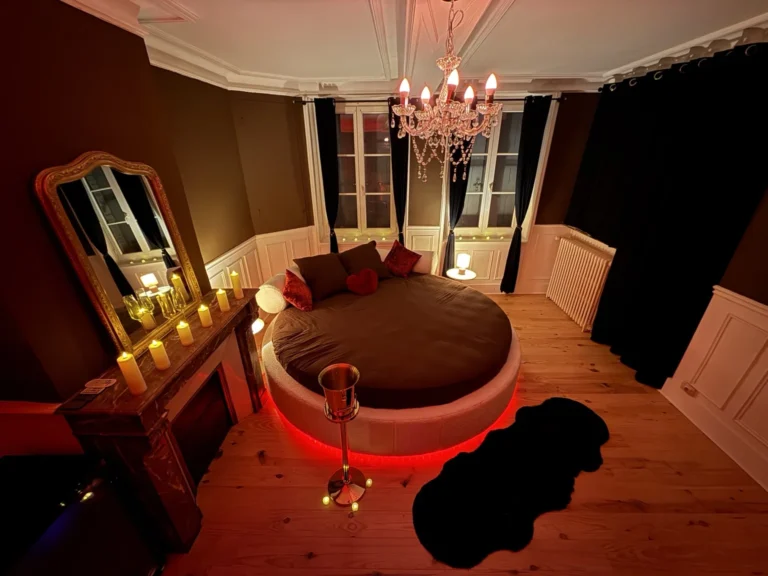
At home, you control the lighting, music, and timing. A private kink-friendly stay gives you a change of scenery and may already have a room suited to the mood. The atlas contains stays across France, Poland, Belgium, Spain, Germany, and other countries, with filters for equipment, country, and price. It lists places; it does not rent them, and there are no invented reviews.
For more practical planning, read fall getaway ideas for couples before choosing a destination. If you are unsure what a room description means, the guide to kink rooms explains common features without assuming that every room has the same layout.
In a public setting, keep the costume and the private meaning separate. Do not involve other guests, staff, or passersby in a scene without clear consent. A dramatic outfit is public; a private agreement remains private.
Frequently asked questions
Do kinky halloween costumes need to include special gear?
No. A mask, jacket, gloves, scarf, or shared color can be enough to establish the mood. Special equipment can be part of a private stay, but only use what you understand and what the host’s rules allow.
How can we keep a costume comfortable for travel?
Pack one statement piece each and wear ordinary layers underneath. Choose shoes you can walk in, avoid anything that restricts circulation, and bring a simple change of clothes. A costume that survives dinner, a hallway, and the journey home is doing excellent work.
What should we do if one partner changes their mind?
Stop the activity and remove the pressure immediately. A costume, role, or earlier agreement does not create ongoing consent. Check in, offer a change of plan, and treat a quiet evening together as a complete success.
Can we use costume props in a private room?
Ask the host first, especially if a prop could mark surfaces, create a safety issue, or be mistaken for room equipment. Keep removable restraints easy to release and have safety shears nearby. If you do not know how an item works, learn from an experienced practitioner or class before using it.
What is good aftercare after a costume role-play scene?
Offer water, food, warmth, quiet, affection, or space, then ask which one is wanted. Talk about comfort and mood without demanding a full review. The next day, note what you would keep, change, or leave in the costume box forever.