In this article
- At a glance
- What kind of retreat fits your couple?
- How should you choose the destination and room?
- What happens from arrival to departure?
- What should you pack for a couples retreat?
- How do consent, privacy, and opting out work?
- What should you check before paying?
- What mistakes make a retreat harder than it needs to be?
- Frequently asked questions
Kink retreats for couples are not one standardized product. One may be a four-day educational program with demonstrations and workshops; another may be a quiet couples immersion with guided exercises; a third may offer a social play space where participation is entirely optional.
The useful question is not “What happens at a kink retreat?” but “What exactly is this program asking us to do, and what remains our private choice?” Before you compare destinations, separate teaching, partner exercises, social time, private couple time, and sexual contact with other attendees. They are different things, despite the marketing blur.
Think of this as a travel plan from the first arrival message to the final checkout. The dates, room, meals, equipment, privacy rules, and emergency arrangements matter just as much as the workshop title.
At a glance
- Who it suits: Couples who want structured learning, private practice, relationship work, or an optional social scene. Married, unmarried, queer, same-sex, and gender-diverse partners may be welcome, subject to the program’s stated eligibility rules.
- Best timing: Spring, summer, and fall weekends are common on retreat calendars, but the exact date and destination matter more than the season.
- How long to go: Plan for anything from several days to a week or more. Published examples include four-day and seven-night formats.
- Rough budget: Published examples checked in September 2026 range from about $230–$300 (€200–€260) for four-day admission to about $12,500–$13,500 (€11,000–€11,880) for a luxury seven-night retreat.
- Book first: Confirm the program’s consent policy, privacy level, inclusions, cancellation deadline, and whether the price is per person or per couple.

What kind of retreat fits your couple?
Start with the format, not the scenery. A kink retreat may combine workshops, demonstrations, power-dynamics discussions, embodiment exercises, relationship work, scheduled meals, social activities, and optional BDSM play. That sounds broad because it is broad. The same phrase can describe a rustic group program or a highly private couples immersion.
| Retreat format | What you may do | What to clarify |
|---|---|---|
| Educational kink retreat | Attend consent classes, demonstrations, and discussions of power exchange or technique. | Whether demonstrations are observation only and whether partner practice is required. |
| Couples intimacy immersion | Join guided relationship exercises, communication work, and private partner sessions. | Whether the service is coaching, education, or clinical therapy. |
| Sex-positive social retreat | Share meals and activities, then choose whether to enter an optional social or play space. | Rules for touch, photographs, nudity, guests, and interaction with other attendees. |
| Private bespoke retreat | Follow a tailored schedule with dedicated instruction or couple time. | Staff access, private-room arrangements, equipment, transfers, and what “private” actually means. |
A workshop or demonstration is education. A partnered exercise asks you and your partner to practice something together. An optional play space is a social setting with its own consent rules. Private couple time is time reserved for the two of you. None of these categories automatically includes sexual contact with other attendees.
A retreat is not automatically therapy, trauma treatment, or medical care. If a provider presents clinical couples therapy, verify the professional qualifications and legal framework for that service in the relevant jurisdiction. A warm room and a thoughtful workbook are not clinical credentials, however charming the lighting may be.
How should you choose the destination and room?
Choose the setting around the program’s actual purpose. A rural converted property may offer space for workshops, meals, and a separate play area. A city apartment may suit a short private stay with a playroom already equipped. A larger shared venue may make social contact easy but offer less solitude. The country and region will affect travel, privacy expectations, local rules, and the practical distance to medical care.
Use the atlas to compare the kinds of stays available before you add a retreat program to the plan. The Kinkstay atlas of kink-friendly stays lists private dungeons, kink rooms, and other stays by equipment and country. It does not rent the rooms, so confirm availability and booking terms with the host or partner platform shown on the individual listing.
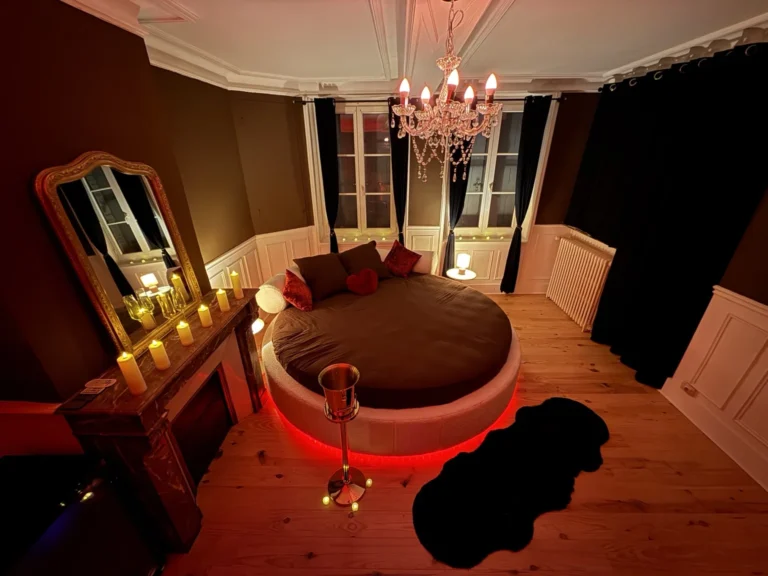
Then ask what your room includes. “Private accommodation” may mean a room with a private bathroom, a separate couple space inside a shared property, or a private venue with staff elsewhere on site. Ask who can enter, whether other guests share the kitchen or outdoor areas, and whether the equipment is reserved for you.
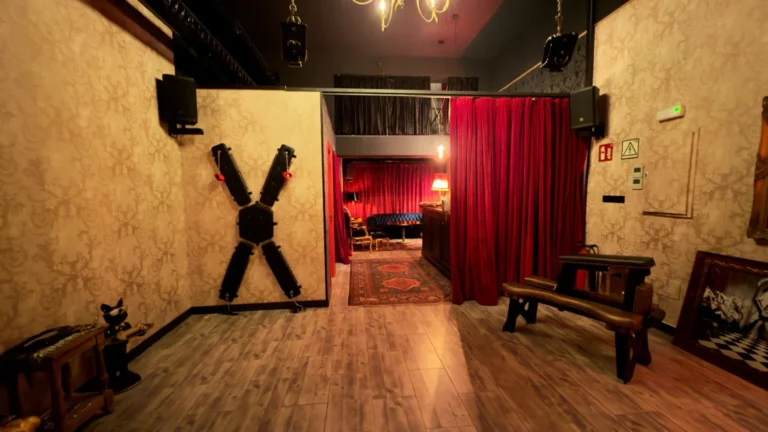
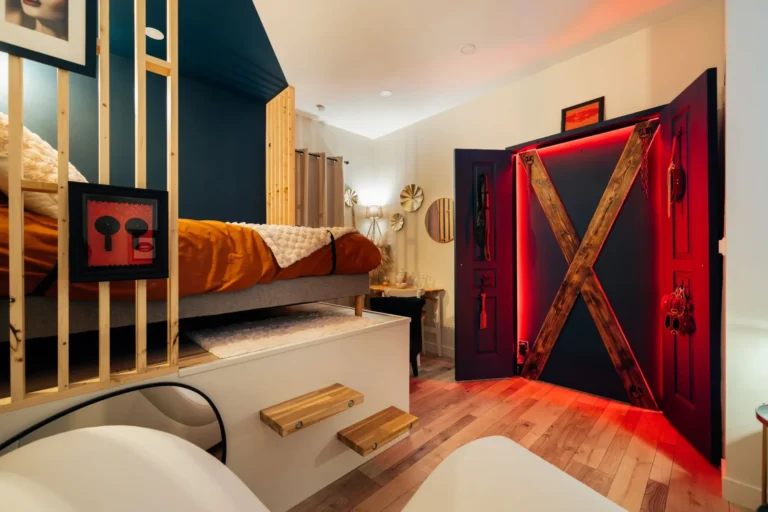
Equipment needs the same plain treatment. A listing may declare a St. Andrew’s cross, tantra chair, sling, cage, massage table, mirror, hot tub, or other gear. That tells you what the host says is present. It does not tell you the size, attachment points, cleaning routine, weight rating, or whether the retreat program permits its use. Request those details before arrival.
What happens from arrival to departure?
A typical first day begins with arrival, orientation, and a review of consent agreements. You may receive a schedule, meet facilitators, learn the privacy rules, and discuss how to ask before touching or photographing anyone. Some programs also explain the layout: sleeping areas, bathrooms, workshop rooms, private spaces, and any optional play area.
A middle day might look like this:
- Morning: breakfast, a consent or communication workshop, and time to rest.
- Late morning: a demonstration or discussion of power dynamics, followed by questions rather than compulsory participation.
- Afternoon: a partnered exercise, private couple time, or an unscheduled break.
- Evening: a shared meal, social time, and an optional play space for those who want it.
- Night: aftercare, a check-in with your partner, and sleep without pressure to continue.
The schedule may be more relaxed than that. A couples immersion could devote much of the day to guided relationship work. An educational retreat may keep you in classrooms and demonstrations. A social format may have fewer formal sessions and more communal time. Ask for a sample timetable, including start and finish times, before you pay.
On the final day, expect a closing discussion, feedback, aftercare, or a practical plan for taking new agreements home. Departure logistics deserve attention too. A checkout at 11 a.m. feels different after a late conversation than it does after a quiet night in a private room. Confirm the checkout time, luggage storage, transportation, and whether the final meal is included.
What should you pack for a couples retreat?
Pack for ordinary travel first. Comfortable clothing, medication in its original packaging, identification, chargers, water, and layers will serve you better than a suitcase organized around one ambitious scene. Bring anything that supports sleep and recovery. Retreat schedules can be full, and private time is not the same as uninterrupted energy.
If you plan to fly from the United States, spare lithium batteries and power banks belong in carry-on baggage. Devices containing lithium batteries should generally travel in carry-on baggage as well; check the Transportation Security Administration and your airline before leaving. Sharp objects, liquids, and personal items also need a destination-specific review.
For activities, ask what the program provides rather than assuming. Equipment, barriers, gloves, disinfectant, towels, and disposal supplies may be included, charged separately, or absent. Bring only items you can legally import and that the program has approved. A host’s cheerful “there is a playroom” is not a customs ruling.
Pack a private agreement as well as a physical bag: discuss hard limits, soft limits, a safeword, a nonverbal stop signal, and what either partner can pause without debate. Being in a relationship does not create automatic consent to a new activity.

How do consent, privacy, and opting out work?
Good programs make consent visible in the schedule and the room. You should know how a facilitator asks for permission during a demonstration, whether touch exercises are opt-in, and what happens if one partner wants to observe while the other participates. Ask whether either of you can skip a class, leave a scene, or leave the retreat without penalty.
A safeword should communicate that an activity must stop or change, but it is not a magic safety device. Agree on its meaning before play, especially if speech might be restricted, and add a nonverbal signal. Stop at uncertainty or visible discomfort. Silence is not agreement, and a person who is drunk, high, or unconscious cannot give valid consent.
Privacy has several layers. Ask about photography bans, phone storage, identifiable images, staff access to rooms, attendee data, and whether conversations can be overheard. Confirm the rules for outside guests, public areas, shared bathrooms, smoking, candles, fire play, and alcohol during activities. These are often venue rules rather than universal law, so get them in writing.
Contact with other attendees should be described precisely. Are guests merely sharing meals? May they talk in a social lounge? Is there an optional play space? Are partner swaps discussed, permitted, or prohibited? You and your partner can say no to all of it. A demonstration does not create an obligation to repeat it, and a social retreat does not turn the group into a dating pool with matching name tags.
Ask about emergency planning before you arrive. Find out who has first-aid training, how far medical care is, whether cell service is reliable, and what the site does in a fire or other emergency. Treat suspension, blood play, needles, cutting, fire, intense impact, and breath play as high-risk activities requiring specialist instruction and suitable equipment. Beginners should never be pressured to try them.
What should you check before paying?
Do not compare headline prices until you know what sits underneath them. One admission may cover basic accommodation or camping and workshops. Another may charge separately for meals, private sessions, transportation, equipment, or a room upgrade. Prices checked in September 2026 are published examples, not a market average.
- Ask whether the price is per person or per couple, and whether deposits are refundable.
- Request the full schedule, eligibility rules, arrival time, cancellation deadline, and exact year.
- Confirm the room, bathroom, accessibility, medication storage, allergies, and mobility arrangements.
- Ask what meals, equipment, transfers, workshops, and private sessions are included.
- Request the consent policy, photography rules, guest rules, emergency plan, and sanitation procedures in writing.
Published examples include about $230–$300 (€200–€260) for four-day kink or play retreat admission, with catered meals potentially costing about $250 (€220) extra. A program with lodging, meals, and workshops may start at about $600 (€520) per person. Four-day intimacy retreats appear around $860–$1,080 (€760–€950), while an all-inclusive intimate retreat may run about $2,500–$3,000 (€2,200–€2,640). Luxury seven-night examples reach about $12,500–$13,500 (€11,000–€11,880), with airfare or airport transfers potentially excluded.
Those figures can change with deposits, exchange rates, room upgrades, and inclusions. Confirm every line directly before booking. If the organizer cannot explain what happens when one partner opts out, the price is not your first problem.
What mistakes make a retreat harder than it needs to be?
The first mistake is assuming the word “retreat” answers the important questions. It does not tell you how private the room is, whether meals are scheduled, whether other attendees are present, or whether play is optional. The second is treating a couple’s shared history as a substitute for negotiation. New settings, new activities, and new people still require fresh consent.
Another common error is packing the schedule too tightly. Leave room for sleep, food, hydration, private conversation, and a change of mind. Do not use alcohol or other intoxicants to manage nerves. Ask for access to water, rest, and a quiet place before you need them.
Do not assume a private venue is legally unregulated. There is no single U.S. or international legal category called a “kink retreat.” Check the laws and customs of every destination and transit country, including rules on public behavior, photography, gatherings, imported items, drugs, weapons, and same-sex conduct or public LGBTQ+ expression where relevant. The U.S. Department of State and destination authorities are the sensible places to start.
Finally, do not mistake a polished program for a verified one. Read the declared equipment and policies carefully, ask direct questions, and remember that Kinkstay reads host listings but does not visit the rooms. The counts are real; the final details still belong to the host and the program provider.
Frequently asked questions
What actually happens at a kink retreat for couples?
Programs may include arrival orientation, consent agreements, workshops, demonstrations, partner exercises, meals, social time, optional play, and closing aftercare discussions. The balance varies widely, so request a schedule rather than assuming every retreat follows the same pattern.
Do couples have to have sex or play with other people?
No. Attendance at a demonstration or sex-positive workshop does not by itself require sexual contact. Ask whether social or play spaces are optional and what rules govern touch, photographs, and interaction with other guests.
Are kink retreats suitable for beginners?
Some educational programs are designed to introduce consent, communication, and basic concepts. Beginners should avoid pressure to attempt high-risk activities and should ask whether demonstrations are observation-only, what instruction is provided, and who is responsible for safety.
How do consent and safewords work at a couples retreat?
Consent should be specific, freely given, and revisited when an activity changes. Agree on a safeword and a nonverbal stop signal before play, but also stop for uncertainty or discomfort; a safeword alone does not make an activity safe or legal.
What is included in the price?
It may include accommodation, meals, workshops, equipment, transportation, private sessions, or only admission. Prices may be quoted per person or per couple, so request an itemized description and confirm deposits, cancellations, transfers, and room upgrades before comparing rates.