In this article
A bondage vacation is a private trip built around a room where restraints and other play equipment are already available. For a first visit, the best version is smaller than the fantasy suggests: one night or a short session, clear consent, a room you understand, and an easy way to stop.
Search results mix overnight apartments, hourly playrooms, love rooms, professional studios, clubs, and public events. Those are not interchangeable. A playroom may have no bed. An adults-only rental may have no equipment. A room called a dungeon may describe its look rather than a legally defined kind of accommodation.
The sensible beginner plan is to choose privacy and clarity over spectacle. Ask what you are booking, what you may use, who can enter, and what happens if one partner changes their mind. A dramatic cross is less useful than a host who answers those questions plainly.
At a glance
- Who it suits: consenting adults who want private, beginner-level bondage away from home.
- Best timing: a quiet period outside major holidays or large fetish events, when availability is better.
- How long: a short private session or one overnight stay, with ordinary meals and sleep built in.
- Rough budget: European short sessions cost about $50–$140 (€40–€120); overnight stays cost about $180–$470 (€150–€400), before travel and extras.
- Book first: the private room and its equipment, then arrange transport that can be changed if plans shift.
Prices checked in October 2026. These are observed European listing ranges, not global averages, and no reliable general U.S. range is available from the reviewed results.

Choose the right kind of place
Start with the format, not the furniture. If the trip is mainly about trying a few restraints, a two- to four-hour playroom can be enough. European short play sessions observed in October 2026 cost about $50–$140 (€40–€120). Private room or studio hire may run about $60–$175 (€50–€150) per hour, but minimum booking periods, cleaning charges, VAT, deposits, and equipment fees can change the total.
An overnight apartment or villa makes more sense when you want time to arrive, settle down, try the room, sleep, and talk afterward. Observed European overnight prices range from about $180–$470 (€150–€400). A Friday-to-Sunday stay runs about $350–$940 (€300–€800), excluding transportation, food, taxes, and deposits unless the listing says otherwise.
For a first trip, one night is usually enough. It gives you privacy without turning one uncertain experiment into a week-long logistical project. A day-use booking can work well if travel is simple and both partners prefer to sleep at home.
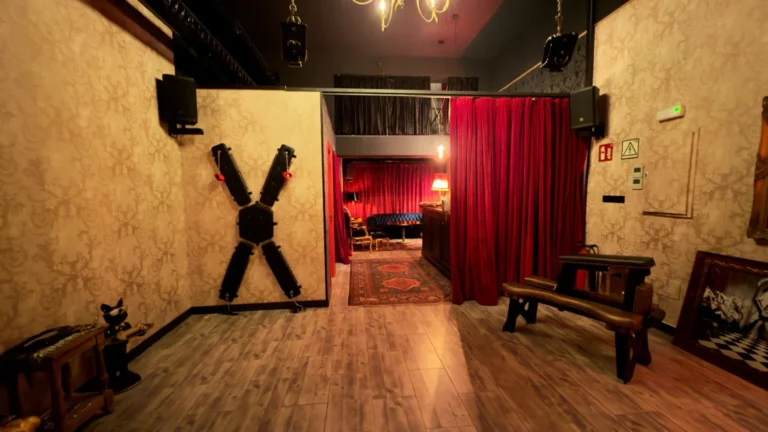
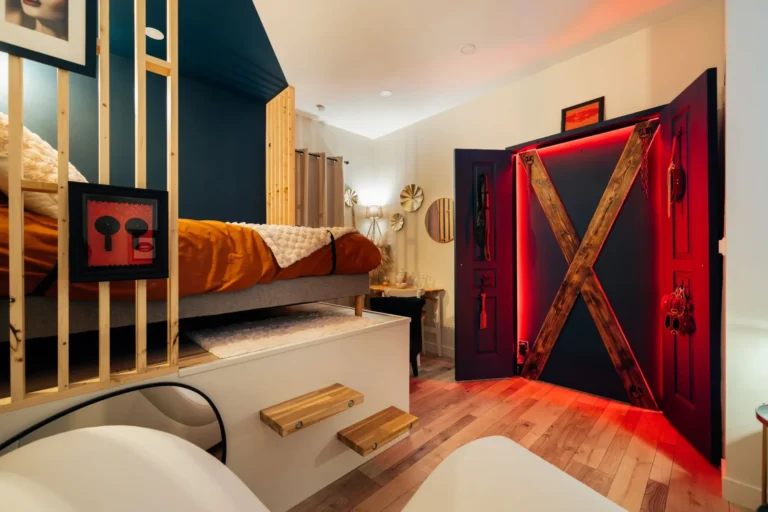
Look at the surrounding area, too. A converted barn with a playroom in Burgundy offers a different rhythm from a city apartment with a St. Andrew’s cross in Paris. Neither is automatically better. You want a quiet arrival, a private room, and a practical way to leave if the mood changes.
Choose a room you can actually use
Read the equipment list as an inventory, not a promise of a scene. A St. Andrew’s cross, tantra chair, sling, cage, or bondage bed may be present, but the listing alone does not tell you whether it is suitable for your experience. Ask what is fixed, what is movable, and what the host permits.
Adults-only does not confirm BDSM equipment, full privacy, a bedroom, a bathroom, or permission to use restraints. Confirm each point directly. Ask about a private entrance, neighboring rooms, sound insulation, housekeeping, cameras, shared areas, and whether staff can enter during the booking.
A useful first room needs only a few understandable options. Soft or padded cuffs, a blindfold, a sensory item such as a feather, and a quick-release method are enough to learn how communication feels. A safety tool must stay within reach rather than in a suitcase across the room.
Our advice: choose the room with the clearest answers, not the longest equipment list.
Ask the host these questions before paying:
- Does the booking include a bedroom and private bathroom?
- Is the play space private for the whole reservation?
- Which restraints and furniture are included, and may beginners use them?
- Are candles, filming, extra guests, bodily fluids, or moving furniture prohibited?
- What are the check-in and checkout times, deposit terms, cleaning charges, and cancellation rules?
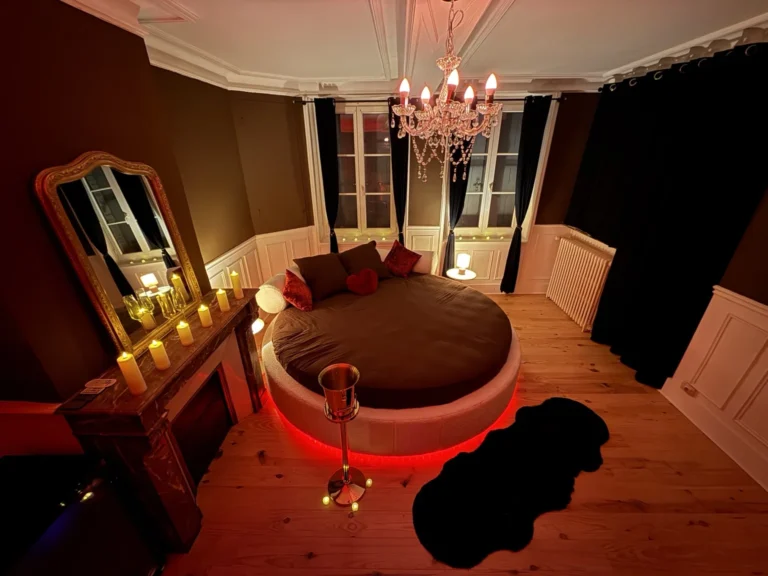
A love room may be romantic and erotic but contain little or no BDSM equipment. A private dungeon may offer the right furniture but no sleeping space. The words matter less than the actual room description and the host’s answers.
For more detail on the difference between a play space and a place to sleep, read how European kink stays work. It is a useful distinction before you compare listings.
Plan the route before the fantasy
Book the room before nonrefundable transport. Major holiday periods and large fetish events can reduce availability and raise prices. A flexible train or flight is not glamorous, but it is kinder to your future self than arriving exhausted at a prepaid room with no way to change course.
For international travel, check the destination and transit country separately. TSA lists handcuffs, adult toys, and shock collars as permitted in carry-on and checked bags, but officers retain final authority and may conduct additional screening. An item permitted through a U.S. airport may still be restricted by customs or law elsewhere.
TSA’s carry-on liquids rule generally covers lubricant, massage oil, cleaning fluid, and similar products. Containers in carry-on baggage should be 3.4 ounces (100 milliliters) or less and placed in the required liquids bag. Larger containers belong in checked baggage if permitted.
Sharp objects should be sheathed or securely wrapped in checked baggage. Safety scissors and other cutting tools may have to be checked unless the specific item is permitted in carry-on luggage. Check TSA’s current guidance before departure, then check official customs guidance or an embassy for the destination and any transit country.
U.S. travelers must follow local law abroad, including rules on sexual conduct, public decency, drugs, gatherings, and restricted materials. The U.S. Department of State warns that violations can lead to detention, fines, deportation, or imprisonment. Legal items at an airport are not automatically legal at the destination, and CBP may require you to declare goods acquired abroad when you return.

Pack for comfort and quick release
Pack less than you think. The room should provide the declared equipment, and hauling a suitcase of unfamiliar gear can turn a calm weekend into a customs conversation and a confusing setup session.
Bring comfortable clothing, water, ordinary toiletries, identification, a phone charger, and anything needed for aftercare. If you use a blindfold or restraints from home, pack only items you already understand. A beginner kit commonly includes soft or padded restraints, a blindfold, a feather or similar sensory item, and a quick-release method.
Safety scissors or another suitable emergency-release tool should be accessible during play. Do not put them inside locked luggage, at the bottom of a bag, or on the other side of the room. If traveling by air, pack cutting tools according to TSA rules and confirm destination customs requirements.
Do not bring a complicated suspension system for a first trip. Do not assume a ceiling hook, shower fixture, door, decorative rail, or bed frame can hold a person. Ask the host which anchors are intended for use, how they are maintained, and whether the equipment is load-rated. If the answer is vague, leave that feature alone.
Make the first scene deliberately small
Talk before the journey, not while one partner is already restrained. Consent should be freely given, informed, specific, enthusiastic, and reversible. Agree on activities, hard limits, soft limits, a safeword, a nonverbal stop signal, privacy, photography, alcohol or drug boundaries, and aftercare.
A partner can change their mind at any moment. Silence, uncertainty, pressure, manipulation, intoxication, sleep, and unconsciousness are not consent. Stay sober enough to notice comfort, circulation, breathing, equipment problems, and changes in communication.
Start by inspecting the room. Look for frayed rope, cracked leather, corroded metal, rough edges, damaged buckles, unsecured anchors, and release mechanisms that could trap a key. Try the simplest equipment first. Learn how it opens before it closes.
Keep communication easy. A blindfold is not beginner-friendly if the person wearing it cannot signal clearly. Stop immediately for numbness, tingling, unusual coldness, discoloration, severe pain, breathing difficulty, panic, confusion, or a change in consent. There is no universal safe duration, tightness threshold, or force limit that makes every restraint suitable.
Afterward, plan the unglamorous parts: water, food, warmth, quiet, a shower if wanted, and an honest check-in. A short walk or a late breakfast may do more for the mood than adding another piece of furniture. If either partner feels unsettled, stop the plan and leave room for rest.
Skip these beginner traps
Skip the week-long first trip. A short session or one overnight stay gives you a clean exit. You can learn what you like without paying for five more nights in a room that now feels uncomfortable.
Skip the equipment contest. More gear does not create more trust. A cross, sling, pole, cage, and ceiling mirror may look impressive, but a familiar pair of cuffs and a clear stop signal can teach you more.
Skip suspension and improvised attachment points. Do not test unfamiliar ceiling points, hooks, doors, shower fixtures, or decorative hardware. Suspension, breath restriction, neck restraints, and prolonged immobilization are poor choices for a first getaway. For any higher-risk practice, learn from an experienced practitioner or a suitable class rather than experimenting on holiday.
Skip restraints that cannot be released immediately. Avoid anything with a complicated lock, inaccessible key, or release mechanism you have not tested. Keep the emergency tool within reach, and never treat a safeword as a substitute for checking in continuously.
Skip the assumption that private means lawful. A private room does not make every activity legal, and a rental’s house rules may prohibit restraints, filming, candles, public nudity, extra guests, or moving furniture. Check the jurisdiction and the booking terms before payment.
Skip hiding the plan from your own partner. A surprise room may sound romantic, but equipment and restraints require informed agreement. Discuss the destination, the room, the limits, and the right to stop before anyone travels.
To compare rooms by declared equipment rather than mood-board language, use the atlas of kink-friendly stays. Every listing is submitted by its host, so confirm the important details directly; Kinkstay reads listings but does not visit the rooms.
Build a calm first-trip itinerary
Keep the schedule spacious. Arrive, inspect the room, unpack, eat something ordinary, and talk again. Put the play session after that rather than treating it as the first item on arrival day. Travel fatigue is not a useful test of communication.
Give the session a clear beginning and ending without promising a fixed duration. Start with activities already discussed, pause often, and stop if either person becomes uncertain. The point is not to use every object in the room. The point is to leave with trust intact and a better idea of what to try next.
Leave time for sleep and a sober conversation in the morning. Ask what felt good, what felt awkward, what needs a clearer rule, and whether the room itself worked. If the answer is “not again,” that is useful information, not a failed holiday.
Frequently asked questions
What is a bondage vacation?
It is a private trip centered on a room with bondage or BDSM equipment already available. The booking may be a short playroom rental, a day-use room, or overnight accommodation with a dedicated play space. The phrase is not a standardized travel product.
Is a BDSM hotel or private dungeon safe for beginners?
It can be suitable if the room is private, the equipment is explained, and both partners agree on boundaries and stop signals. Confirm the bedroom, bathroom, access rules, anchors, and house rules with the host. A dramatic room is not automatically a safe room.
What should beginners bring on a bondage vacation?
Bring comfortable clothing, water, identification, a phone charger, ordinary toiletries, and only familiar restraints or sensory items. Keep a suitable emergency-release tool accessible during play. Pack liquids and cutting tools according to airport rules and check destination customs guidance.
Can I take handcuffs, restraints, and adult toys on a plane?
TSA lists handcuffs, adult toys, and shock collars as permitted in carry-on and checked bags, but officers have final authority at the checkpoint. Sharp items and liquids have separate packing rules. Destination and transit-country customs rules apply independently, so check official guidance before departure.
How much does a BDSM room or bondage vacation cost?
Observed European short sessions cost about $50–$140 (€40–€120), day-use bookings about $140–$290 (€120–€250), and overnight stays about $180–$470 (€150–€400). A Friday-to-Sunday stay costs about $350–$940 (€300–€800). These October 2026 ranges exclude transport and may not include cleaning, taxes, deposits, or equipment fees.
What should beginners skip on their first kink getaway?
Skip suspension, breath restriction, neck restraints, prolonged immobilization, improvised attachment points, and equipment that cannot be released immediately. Also skip a long prepaid trip if a short session or one night would answer the same questions. Keep the first visit private, sober, and easy to end.